
What is GrowthBook? Open Source Feature Flagging & Experimentation Platform
In the ever-evolving landscape of software development, the ability to test and iterate on features quickly is crucial for success. GrowthBook has emerged as a powerful open-source platform that enables teams to implement feature flagging and experimentation seamlessly. By allowing businesses to safely release features to production and measure their impact on key metrics, GrowthBook empowers organizations to make data-driven decisions that enhance user experience and drive growth.
The Origins of GrowthBook
GrowthBook was founded with the vision of simplifying the experimentation process for product teams. Recognizing the challenges that come with feature rollouts and the need for robust analytics, the creators of GrowthBook aimed to develop a solution that combines flexibility, ease of use, and powerful insights.
The Philosophy Behind GrowthBook
At its core, GrowthBook is built on the belief that experimentation should be accessible to all teams, regardless of their size or technical expertise. By providing an open-source platform, GrowthBook encourages collaboration and innovation, allowing developers to customize the tool to fit their unique needs.
Key Features of GrowthBook
GrowthBook offers a comprehensive suite of features designed to streamline the experimentation process and enhance feature management. Here are some of the standout capabilities that make GrowthBook a preferred choice for many organizations:
1. Feature Flagging
Feature flagging is a cornerstone of GrowthBook’s functionality. This feature allows teams to:
- Gradually Roll Out Features: Release new features to a small percentage of users before a full rollout, minimizing risk and gathering initial feedback.
- Target Specific User Segments: Tailor feature releases based on user demographics, behavior, or other criteria to ensure the right audience receives the right features.
- Toggle Features On and Off: Quickly enable or disable features based on real-time performance metrics, allowing for agile responses to user feedback.
2. Experimentation Framework
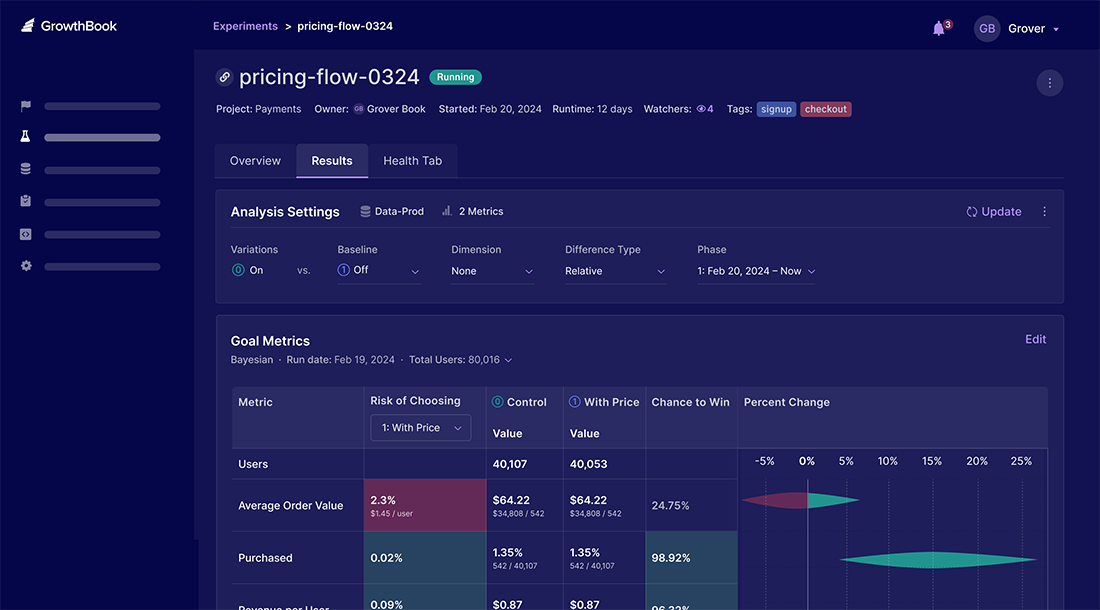
GrowthBook provides a robust experimentation framework that enables teams to run A/B tests and multivariate tests with ease. Key aspects include:
- Custom Metrics Tracking: Define and track custom metrics that align with business goals, providing a clearer picture of success.
- Real-Time Analytics: Access real-time analytics to understand how features are performing and make data-driven decisions quickly.
- Cohort Analysis: Segment users into cohorts to analyze how different groups respond to features, enabling targeted improvements.
3. Open Source Flexibility
Being an open-source platform, GrowthBook offers several advantages:
- Customization: Teams can modify the platform to suit their specific needs, integrating it with existing tools and workflows.
- Community Support: A vibrant community of developers contributes to the platform, ensuring continuous improvement and innovation.
- Cost-Effective Solution: As an open-source tool, GrowthBook eliminates licensing fees, making it a cost-effective choice for organizations of all sizes.
4. Integration Capabilities
GrowthBook integrates seamlessly with various tools and platforms, enhancing its functionality. Key integrations include:
- Analytics Platforms: Connect with popular analytics tools like Google Analytics, Mixpanel, and Amplitude to enrich data insights.
- Development Frameworks: Integrate with development frameworks to streamline the implementation of experiments and feature rollouts.
- Collaboration Tools: Work with tools like Slack and Jira to ensure that all team members are aligned and informed about ongoing experiments.
The Importance of Feature Flagging and Experimentation
In today’s competitive landscape, feature flagging and experimentation are not just best practices; they are essential for success. Here’s why businesses should prioritize these strategies:
Data-Driven Decision Making
Experimentation allows teams to make decisions based on empirical data rather than assumptions. By testing hypotheses and analyzing results, organizations can identify what works and what doesn’t, leading to more effective product development.
Faster Iteration Cycles
With the ability to run experiments quickly and efficiently, teams can iterate on features faster. This agility enables companies to respond to user feedback and market changes promptly, ensuring they remain competitive.
Enhanced User Experience
By understanding how users interact with features, teams can optimize the user experience. Experimentation helps identify pain points and areas for improvement, leading to products that better meet user needs.
Real-World Applications of GrowthBook
GrowthBook has been successfully implemented by various companies across different industries. Here are a few examples of how organizations are leveraging GrowthBook to enhance their product development processes:
E-Commerce Platforms
E-commerce companies use GrowthBook to test new features, such as personalized recommendations or checkout processes. By running experiments, they can determine which features drive conversions and improve the overall shopping experience.
SaaS Products
Software-as-a-Service (SaaS) companies leverage GrowthBook to manage feature rollouts and optimize user onboarding. By experimenting with different onboarding flows, they can identify the most effective strategies for user retention.
Mobile Applications
Mobile app developers utilize GrowthBook to test new functionalities and user interface changes. By gathering data on user interactions, they can refine their apps to enhance user satisfaction and engagement.
Best Practices for Using GrowthBook
To maximize the benefits of GrowthBook, organizations should consider the following best practices:
Define Clear Objectives
Before launching experiments, teams should establish clear objectives. Understanding what they aim to achieve will guide the experimentation process and help measure success effectively.
Start Small
When rolling out new features, start with a small user segment. This approach minimizes risk and allows teams to gather valuable feedback before a full-scale launch.
Monitor Performance Metrics
Regularly monitor performance metrics to assess the effectiveness of experiments. This data will inform future decisions and help teams optimize their product offerings.
Foster a Culture of Experimentation
Encourage a culture of experimentation within the organization. By promoting the value of data-driven decision-making, teams will be more inclined to leverage GrowthBook for their product development needs.
Common Questions About GrowthBook
Q: How does GrowthBook differ from other experimentation platforms?
A: GrowthBook stands out due to its open-source nature, flexibility, and robust feature flagging capabilities, making it a powerful tool for product teams.
Q: Is GrowthBook suitable for small businesses?
A: Yes, GrowthBook is designed to be user-friendly and scalable, making it suitable for businesses of all sizes.
Q: Can GrowthBook handle large-scale experiments?
A: Absolutely! GrowthBook is built to support numerous experiments simultaneously, ensuring it can handle large-scale needs.
Looking Ahead: The Future of Feature Flagging and Experimentation
As the demand for data-driven decision-making continues to grow, platforms like GrowthBook will play a crucial role in shaping the future of product development. By enabling teams to experiment efficiently and effectively, GrowthBook is paving the way for more innovative and user-centric products.